What to Expect on a Tiger Photography Safari in India
A tiger photography safari in India combines patient fieldwork, changing forest light, close attention to animal behavior, and the anticipation of seeing a Bengal tiger emerge from the landscape. Our
12-day Tiger Trails journey through Kanha and Bandhavgarh and shorter
8-day Bandhavgarh itinerary are personally hosted and led by award-winning wildlife photographer Jennifer Hadley, with hands-on photography mentorship throughout each journey.
Key Takeaways
- Tiger Trails is personally hosted and led by Jennifer Hadley, with photography guidance in the field and editing assistance at the accommodations.
- Only two travelers share each safari jeep, providing room for equipment, freedom of movement, and clearer photographic angles.
- Most field days include morning and afternoon safari drives, while one dedicated full-day safari provides extended park access.
- The journeys welcome photographers at different experience levels, wildlife lovers, solo travelers, and non-photographer companions.
What Happens on an India Tiger Photography Safari?
An India wildlife photography tour is not simply about arriving in a national park and waiting for a tiger to appear. It is a field experience shaped by observation, preparation, patience, and an understanding that wildlife moves on its own terms.
Jennifer Hadley personally hosts and leads each Tiger Trails departure. As an award-winning professional wildlife photographer and experienced international photography tour leader, Jennifer works directly with photographers throughout the journey. Her approach combines practical camera guidance with an understanding of animal behavior, ethical field practices, and visual storytelling.
Photography mentorship takes place where it is most useful: during real wildlife encounters.
Jennifer helps photographers prepare for changing light, choose appropriate settings, respond to animal movement, and consider how composition and background affect the final image. Guidance is adapted to each photographer’s existing experience and creative goals.
Some photographers may be working on shutter speed and exposure in changing forest conditions. Others may want to refine their timing, improve their compositions, or create more purposeful, story-driven wildlife photographs.
Tiger Trails is not limited to advanced or professional photographers. Beginners, experienced photographers, wildlife lovers, solo travelers, couples, and non-photographer companions are welcome.
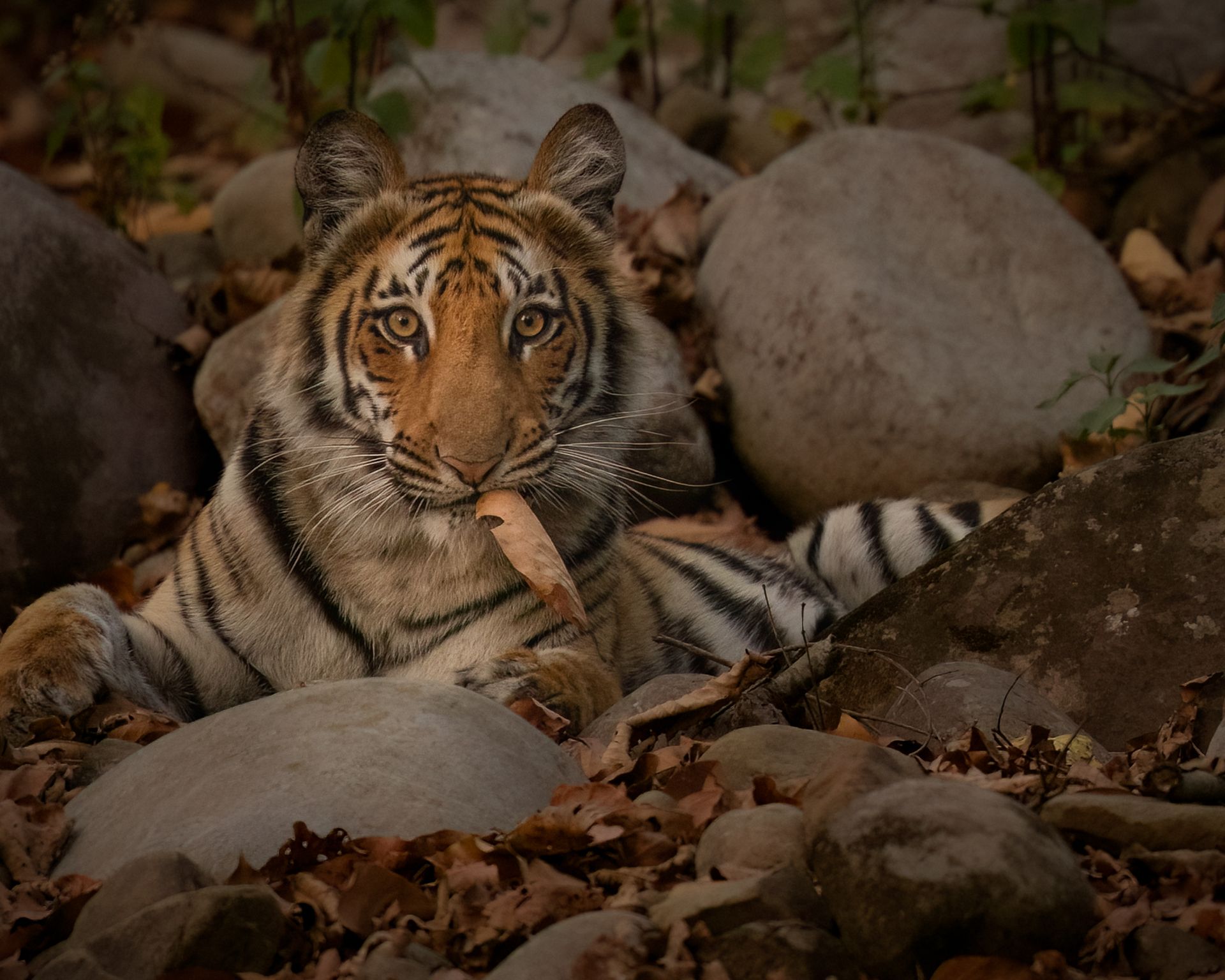
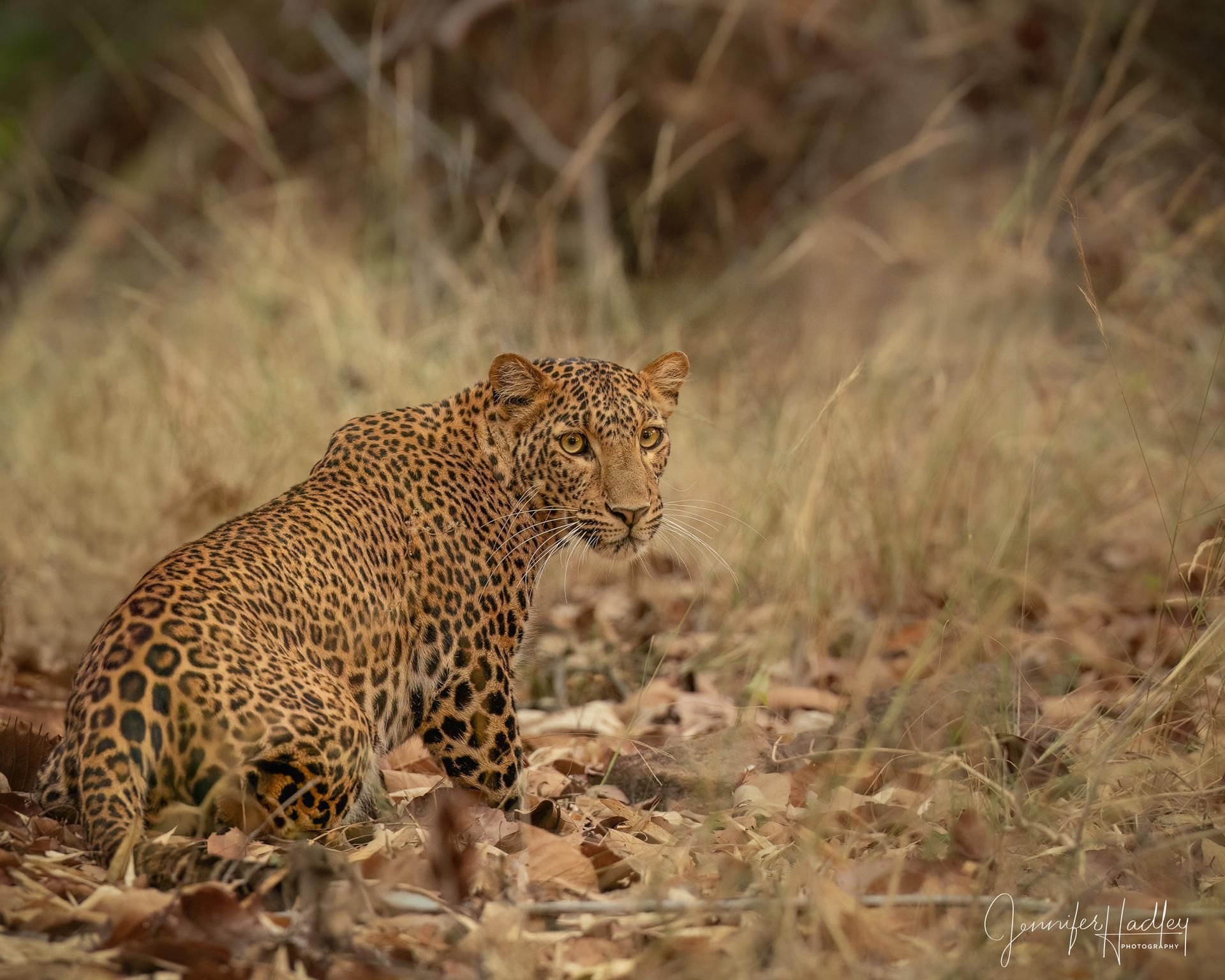
The experience extends well beyond Bengal tigers. Kanha and Bandhavgarh support leopards, sloth bears, wild dogs, Indian gaur, spotted deer, elephants, and varied birdlife. Each drive may present a different subject, landscape, or behavior to observe and photograph.
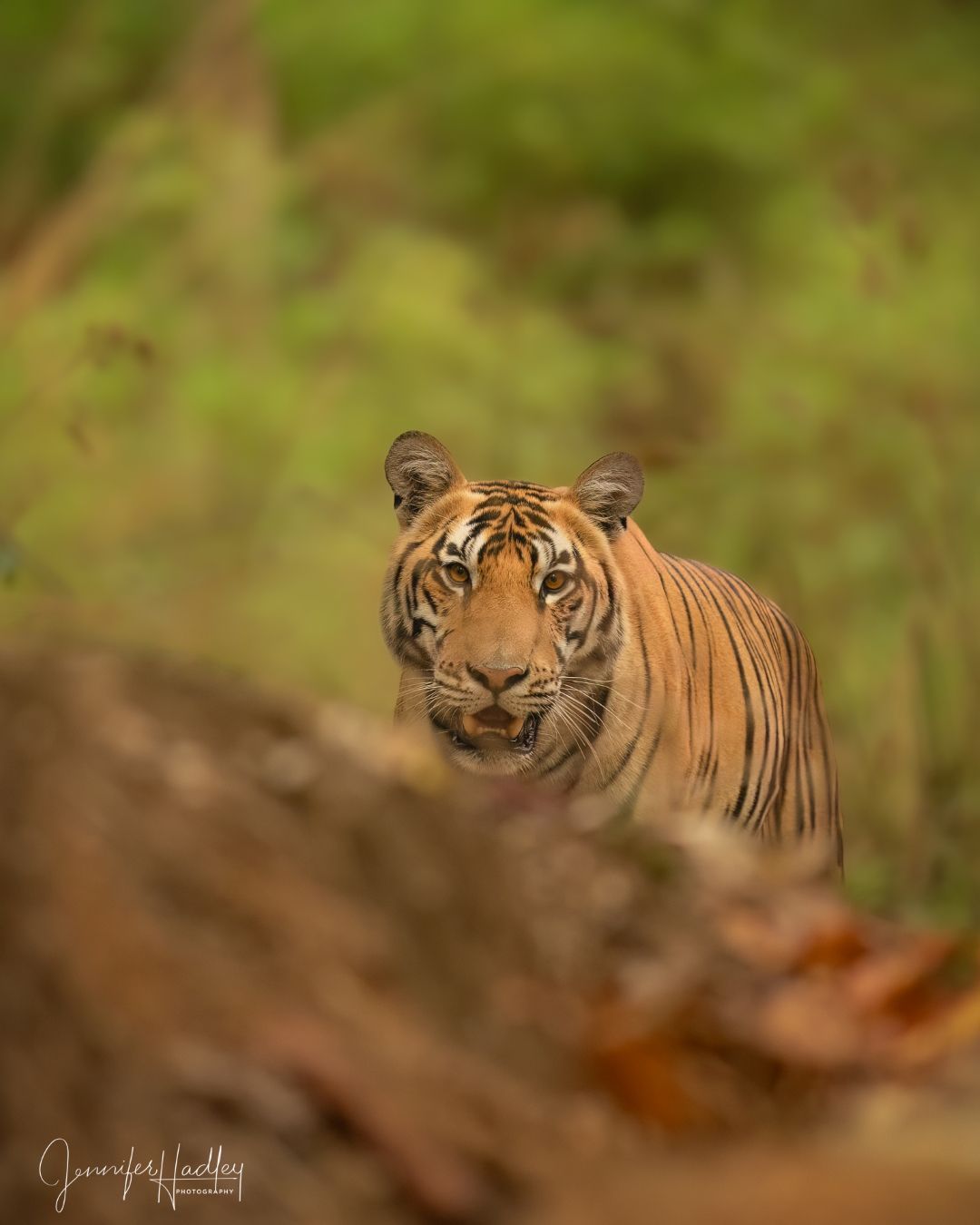
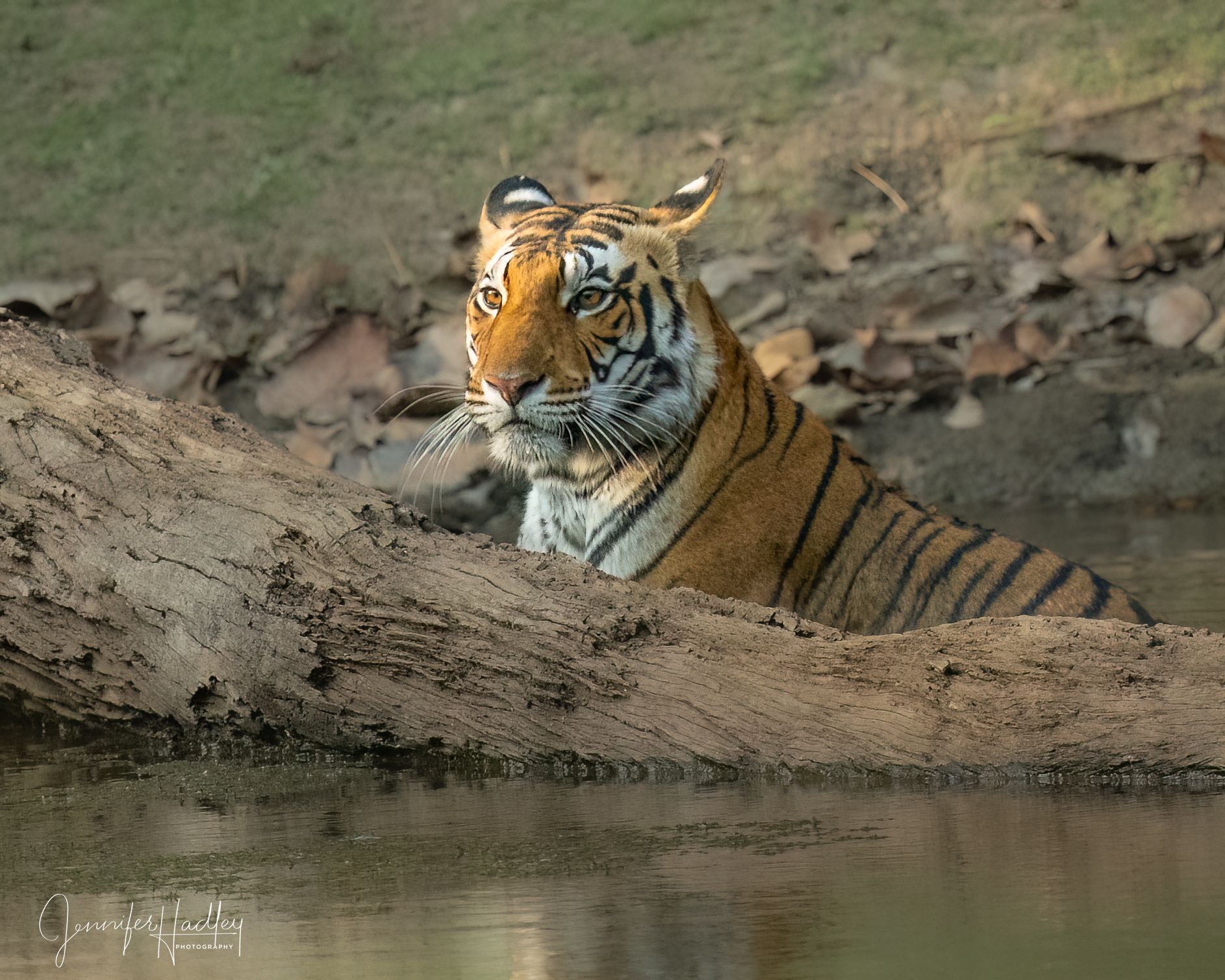
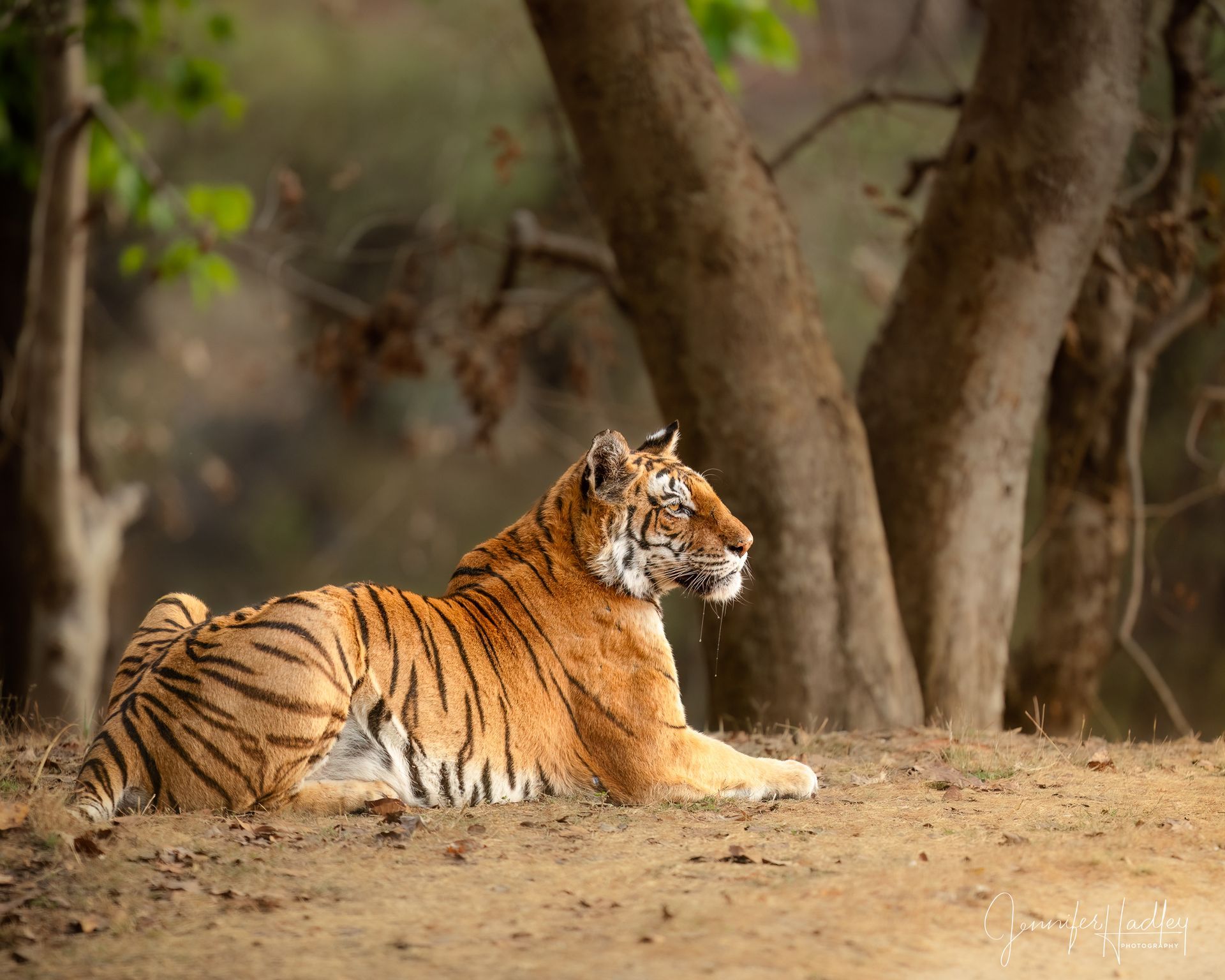
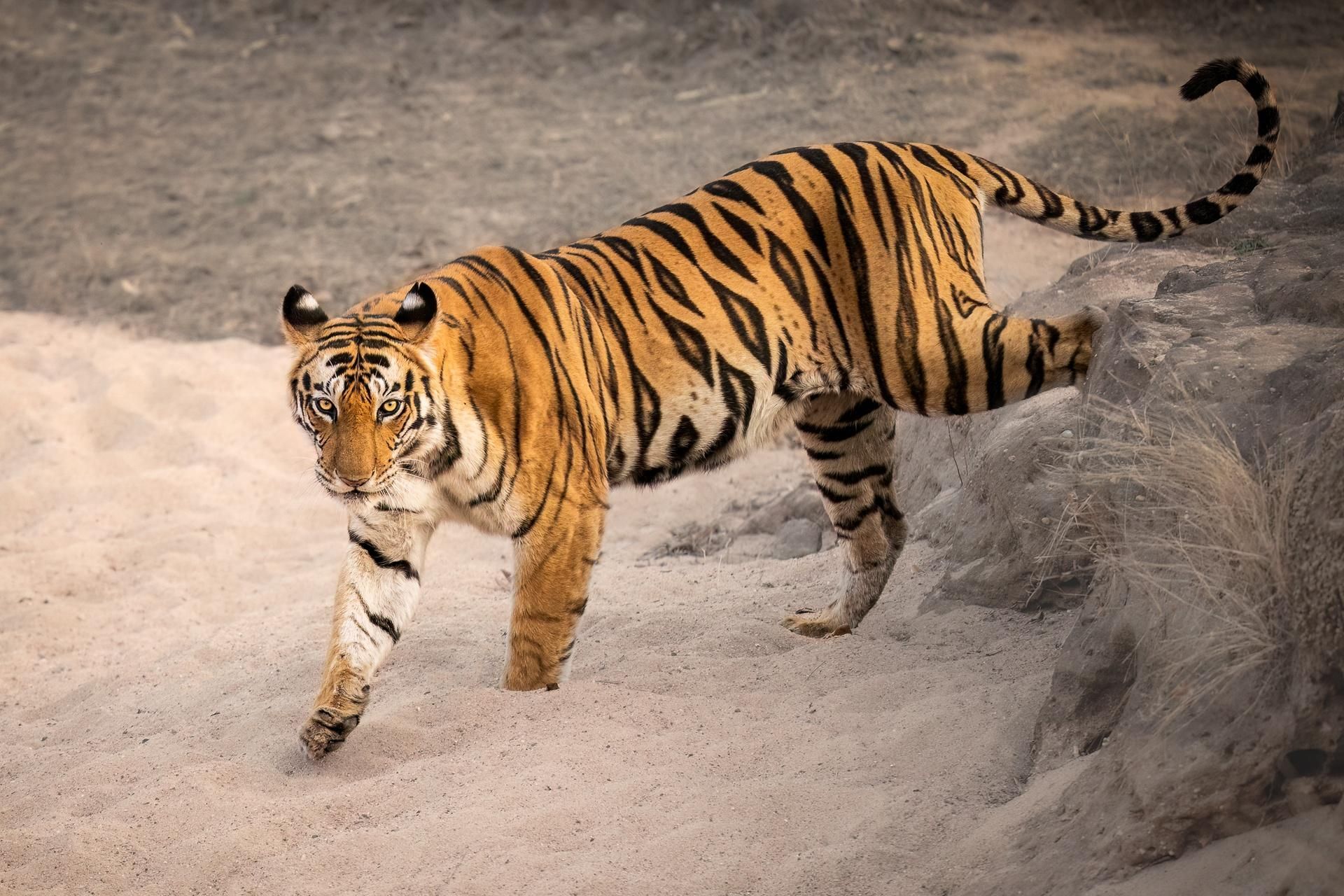
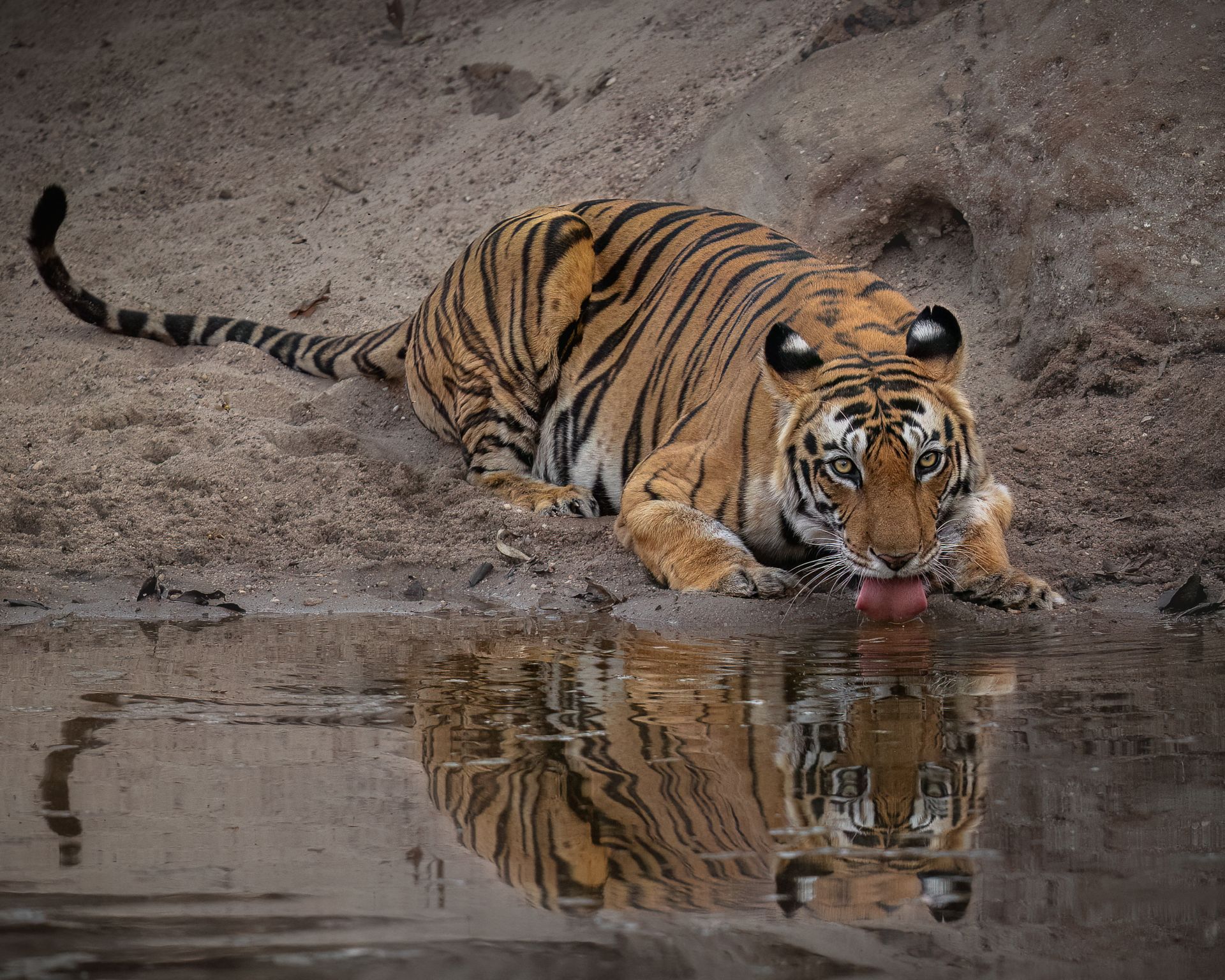
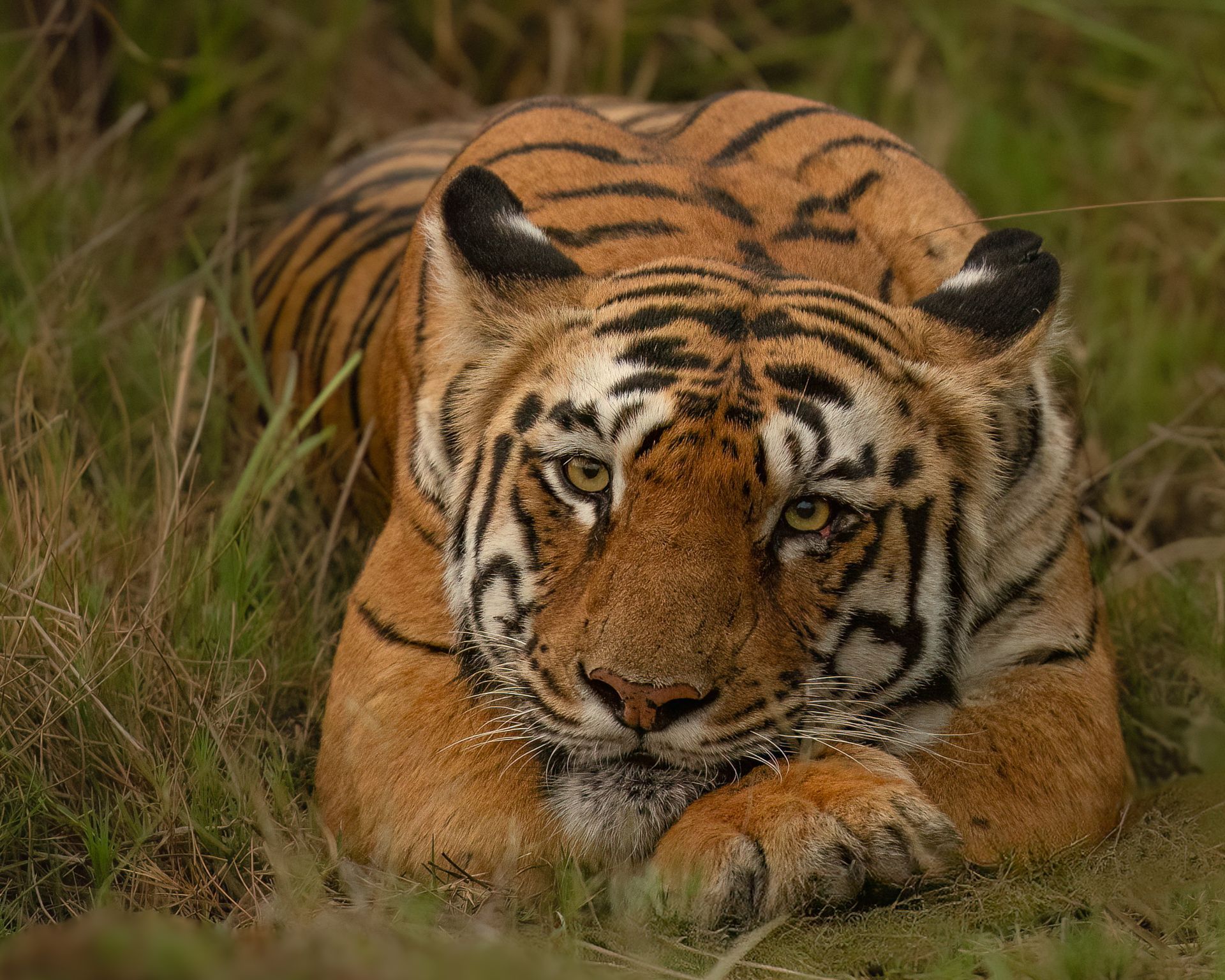
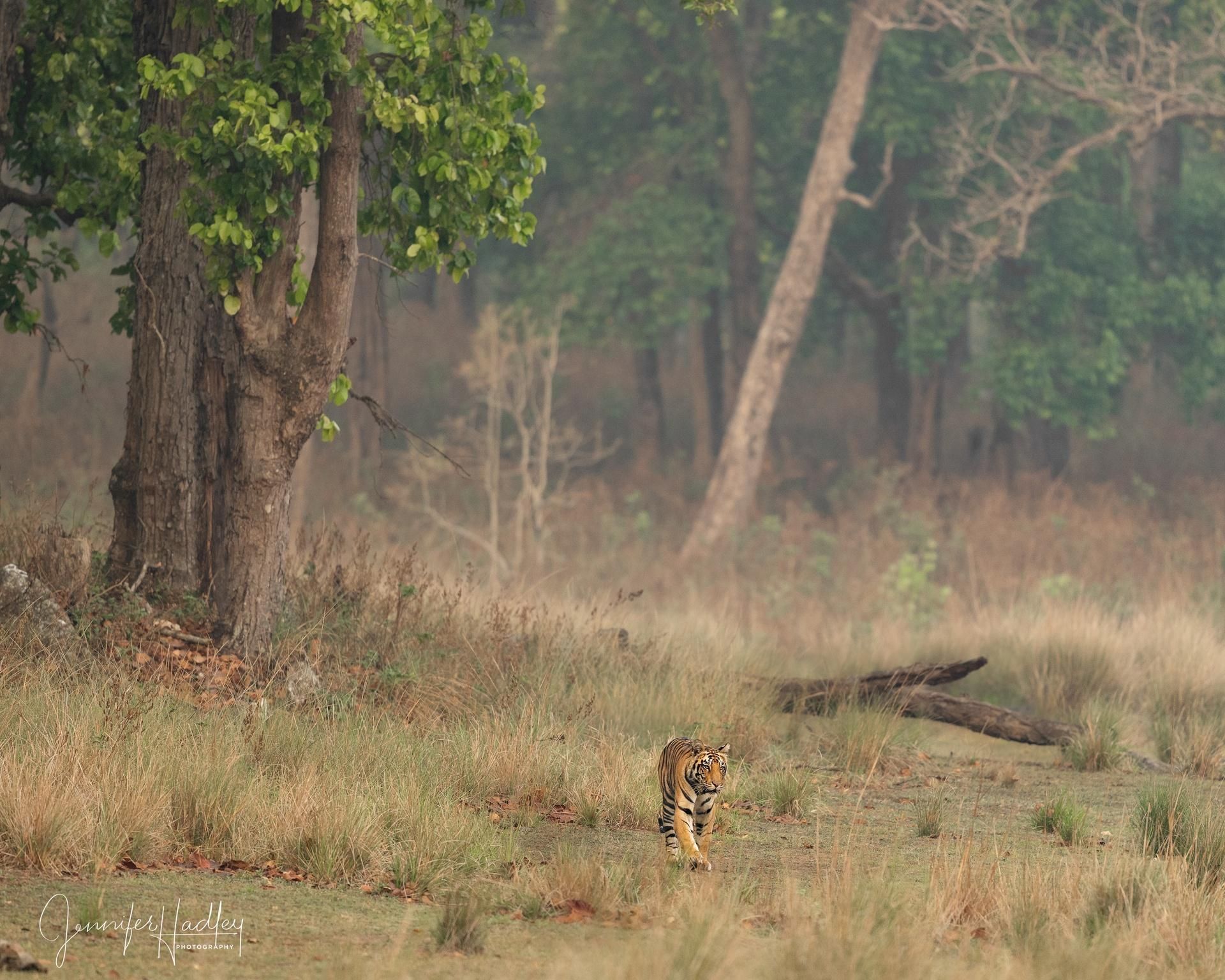
A tiger may emerge from dense forest, cross a road, approach a waterhole, or remain partly concealed in the landscape. These encounters cannot be staged or guaranteed. Photographers must remain attentive and prepared, even during quieter periods.
That uncertainty is part of what makes photographing wild tigers so compelling.
What to Expect From Morning and Afternoon Safari Drives
Most safari days include separate morning and afternoon drives, with a break at the lodge during the middle of the day.
Morning drives begin early. Leaving the accommodations before sunrise and travel to the park gate in preparation for the day’s first safari.
The light can change quickly once inside the park. Dense forest may create low-light conditions, while meadows, waterholes, and more open sections of the landscape may be considerably brighter. Photographers need to be ready to adjust as the vehicle moves between these environments.
Jennifer is present in the field to help photographers prepare for those changes. This may include checking exposure, adjusting shutter speed, considering focal length, or preparing for the direction in which an animal may move.
The safari jeep becomes the photographer’s working space. Tiger Trails allocates only two photographers to each vehicle, rather than filling every available seat.
This arrangement provides:
- More room for cameras and longer lenses
- Greater freedom to move between shooting positions
- Improved stability while photographing
- Clearer angles during wildlife encounters
- More direct access to photography guidance
The afternoon drive brings a different set of conditions. Temperatures, light, and animal activity may change as the day progresses, while the later part of the drive can offer lower, warmer light.
No two safari drives are identical.
One may involve time observing a tiger. Another may focus on a leopard, sloth bear, deer, gaur, birdlife, or the surrounding landscape. Photographers may also spend time waiting in an area where wildlife activity has been detected.
The objective is not to rush through a checklist of animals. It is to remain observant, understand what the park is offering, and be prepared when a photographic opportunity develops.
Our
longer Tiger Trails itinerary includes time in both Kanha and Bandhavgarh National Parks.
Kanha is characterized by sal and bamboo forests, open meadows, and lakes. Bandhavgarh offers forests, rocky hills, grasslands, waterholes, and varied terrain. Moving between the two parks allows photographers to work in different landscapes and wildlife habitats.
Our
shorter Tiger Trails II journey focuses exclusively on Bandhavgarh. It is intended for photographers and wildlife travelers who want substantial time in the field but have less time available for a longer journey through India.
How Local Guides Search for Tigers and Other Wildlife
Experienced local naturalist guides play an essential role in every Tiger Trails safari.
Their knowledge of the parks, roads, ecosystems, and animal behavior helps shape decisions throughout each drive. They understand how wildlife uses the landscape and how conditions may change from one area of the park to another.
Searching for a tiger requires patience and interpretation.
Guides follow the signs and sounds of the forest, including animal behavior and alarm calls that may indicate the presence of a predator. They also draw on their familiarity with the park and recent wildlife movement when deciding where to travel or when it may be better to remain in one place.
There are times when the best decision is to move. There are also times when the most productive approach is to wait quietly.
Jennifer’s professional photography mentorship works alongside the local naturalists’ field knowledge. While the guides interpret the wildlife activity and surrounding ecosystem, Jennifer helps photographers prepare technically and creatively for a possible encounter.
This may include:
- Checking shutter speed before an animal moves
- Preparing for low light beneath the trees
- Watching the background as well as the subject
- Anticipating possible movement
- Leaving enough space within the frame
- Recognizing when a wider environmental image may tell a stronger story
Wildlife encounters can develop quickly. A photographer who prepares before the animal enters view is better positioned to respond calmly and make deliberate decisions.
Tiger Trails also follows an ethical approach to wildlife photography. The animal’s wellbeing and natural behavior remain more important than forcing a photographic opportunity.
The aim is to observe and photograph authentic moments as they unfold.
What Happens Between the Safari Drives?
The midday break is an important part of the safari schedule.
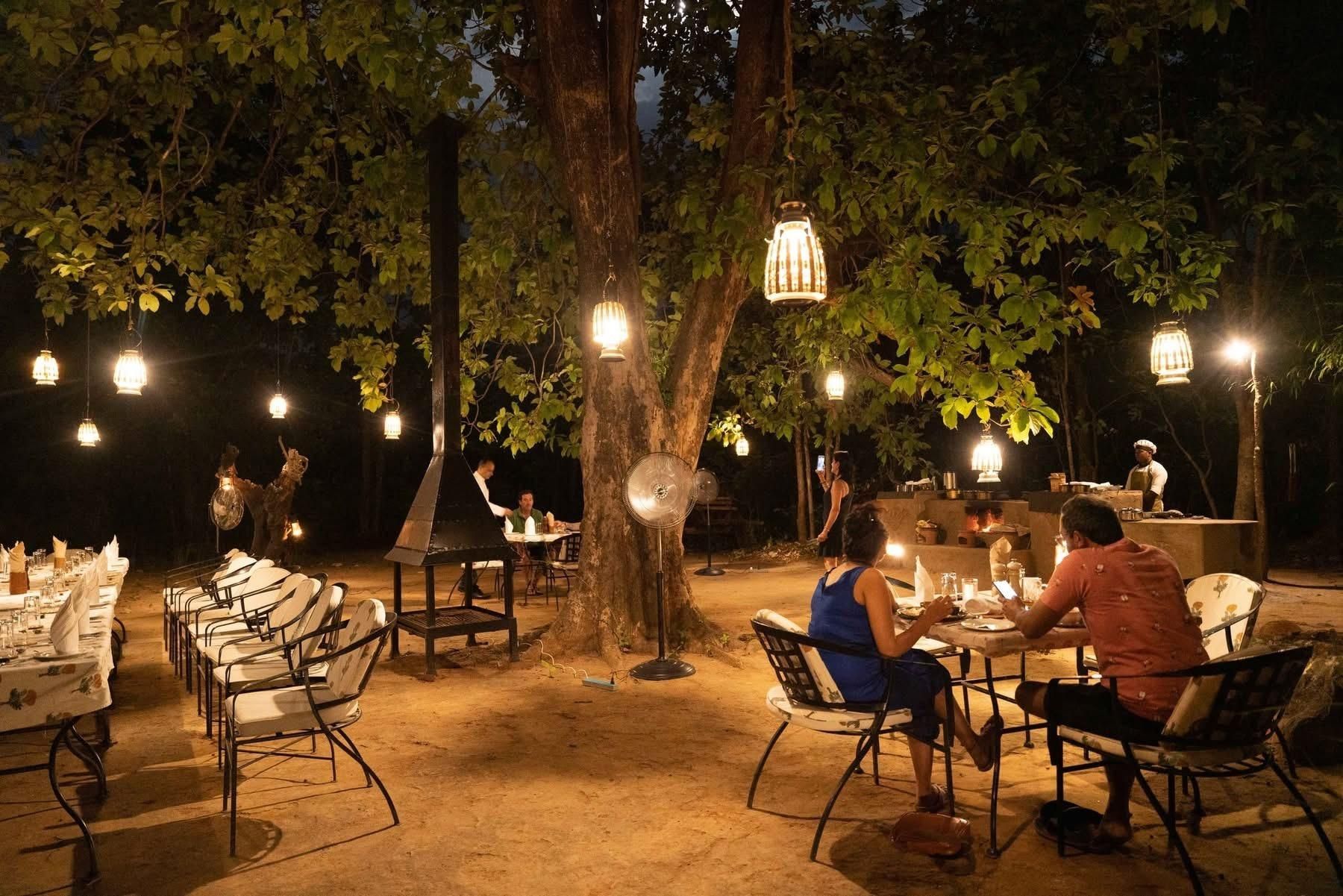
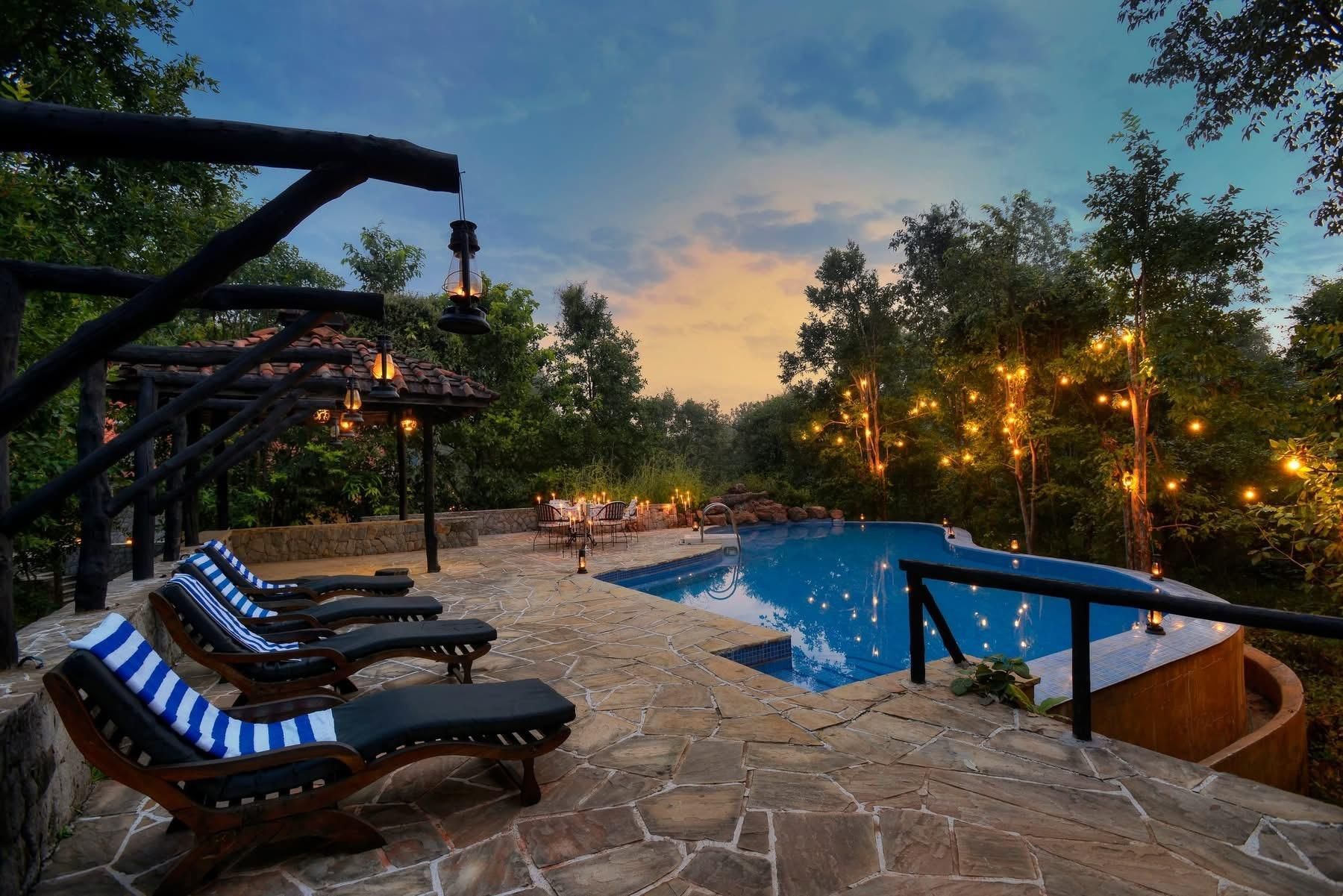
After the morning drive, travelers return to the lodge for lunch and time to rest before the afternoon departure. These quieter hours create a useful balance between concentrated time in the field and personal time at the accommodations.
Travelers may enjoy to:
- Rest after the early start
- Have lunch and spend time at the lodge
- Swim or enjoy the gardens and surrounding environment
- Download and back up photographs
- Review camera settings
- Work on image selection or editing
- Discuss the morning’s photography with Jennifer
Photography support is available, but every break does not need to become a formal workshop. Travelers can decide how actively they want to use this time.
For photographers who want feedback, the break provides an opportunity to review what happened during the morning drive while the experience is still fresh.
Jennifer may help assess whether a shutter speed was appropriate, how the background affected a photograph, or whether another composition could have strengthened the image. Because another safari drive follows later that day, photographers can apply those lessons immediately.
This combination of field instruction and practical review is one of the defining elements of Tiger Trails. The photography mentorship continues across the journey rather than being limited to a scheduled classroom session.
The accommodations have also been selected for their locations close to the park gates. This reduces unnecessary driving before early safari departures and allows travelers to focus more of their time and energy on the experience.
Current Tiger Trails inclusions cover accommodations, meals, internal flights within India, the Delhi hotel stay, airport pickup on arrival, private ground transportation, drinks, and photography guidance. The longer itinerary also includes the transfer between Kanha and Bandhavgarh.
International flights to and from India and laundry are not included.
How a Full-Day Safari Differs From a Normal Safari Day
A normal safari day consists of separate morning and afternoon drives. Travelers leave the park after the morning session and return later for the afternoon drive.
Each Tiger Trails itinerary also includes one special full-day safari pass.
The full-day pass allows our group to:
- Enter the park 15 minutes before the general public
- Leave 15 minutes after standard access ends
- Remain inside the park throughout the middle of the day
- Enter through any available gate
The primary advantage is continuity.
Instead of leaving the park at the end of the morning drive, photographers can remain in the field and observe how wildlife activity and photographic conditions change throughout the day.
Standard safari vehicles leave the park during the midday period. Remaining inside can therefore create quieter field conditions and opportunities for more intimate wildlife observation.
The extended access also allows photographers to work through a wider range of light. Conditions may shift considerably between early morning, midday, afternoon, and the final part of the day.
Jennifer remains with the photographers throughout the full-day safari, providing mentorship as the light, animal behavior, and technical requirements change.
The pass does not guarantee a tiger sighting. Tigers remain wild animals moving freely through the landscape.
Its value lies in providing more time, greater flexibility, and the opportunity to remain patient when the field signs suggest that waiting may be worthwhile.
There is less pressure to leave a promising area simply because the standard morning session has ended. Photographers can continue observing the landscape and allow the situation to develop naturally.
Current Tiger Trails Journeys
Both current Tiger Trails departures are personally hosted, guided, and mentored by Jennifer Hadley.
Tiger Trails: Kanha and Bandhavgarh
- Dates: April 1–12, 2027
- Duration: 12 days
- National parks: Kanha and Bandhavgarh
- Group size: Two to eight travelers
- Safari vehicles: Two photographers per jeep
- Price: From USD $8,800
- Deposit: USD $1,500
This longer journey combines two national parks and two distinct photographic environments. It includes accommodations, meals, internal flights within India, a hotel stay in Delhi, airport pickup, private ground transportation, the transfer between the parks, drinks, and photography guidance.
Explore the 12-day Tiger Trails journey
Tiger Trails II: Bandhavgarh
- Dates: April 14–21, 2027
- Duration: 8 days
- National park: Bandhavgarh
- Group size: Two to eight travelers
- Safari vehicles: Two photographers per jeep
- Price: From USD $5,800
- Deposit: USD $1,500
This shorter itinerary focuses exclusively on Bandhavgarh National Park. It is designed for photographers and wildlife travelers who want a concentrated India wildlife experience within a shorter timeframe.
Explore the 8-day Bandhavgarh journey
Current prices, booking conditions, and availability should be confirmed before making travel arrangements.
Step Into India’s Tiger Country With Tiger Trails
Tiger Trails is designed for photographers and wildlife travelers who want professional guidance, carefully managed logistics, and meaningful time in India’s tiger habitats.
Each departure is personally hosted and led by Jennifer Hadley. As an award-winning professional wildlife photographer, Jennifer works directly with photographers in the field and at the accommodations, helping them respond to changing light, animal behavior, camera settings, composition, and editing.
The small-group format and two-travelers-per-jeep arrangement provide the space and individual attention required for serious photography without excluding beginners, wildlife lovers, or non-photographer companions.
Travelers can choose between a longer journey through Kanha and Bandhavgarh or a shorter itinerary focused exclusively on Bandhavgarh.
Explore the current tours through
Jennifer Hadley Photography or
contact our team to discuss availability and determine which Tiger Trails journey best matches your available time, photography experience, and interest in India’s wildlife.
Recent Posts